

Let’s be honest being a woman today often feels like walking a tightrope while juggling a dozen roles at once between career ambitions, relationships, family care, social expectations and the quiet longing for me time, many of us live in a constant state of go, go, go.
Mindfulness practices for women offers a way back to ourselves it is not about emptying the mind or chasing perfection it’s about coming home to our breath, our emotions and the present moment.
In a world where digital notifications and emotional noise never seem to end mindfulness helps women reconnect with their inner rhythm it helps manage stress, regulate emotions and nurture self-awareness so that peace isn’t something you have to earn but something you live.
Whether you’re a working professional trying to balance deadlines and self care, a mom navigating endless multitasking or simply someone feeling emotionally drained mindfulness can become your safe space and your reset button.
Table of Contents
What Are Mindfulness Practices?
Before diving deep, let’s simplify the idea.
Mindfulness practices for women are techniques that help you bring your full attention to the present moment without judgment these can be as simple as focusing on your breath, noticing your thoughts or savouring the taste of your morning tea.
It’s about awareness seeing things as they are, not as your stress or past experiences colour them.
When practiced regularly mindfulness enhances mental clarity, emotional balance, and stress management it teaches you to pause before reacting to respond from awareness instead of habit.
In essence, mindfulness does not erase chaos it helps you find calm within it.
Why Mindfulness Matters for Women
Modern women carry an invisible backpack filled with mental load, emotional responsibility and social expectations from remembering everyone’s birthdays to handling deadlines and hormonal shifts this constant state of mental busyness can lead to burnout.
Here’s why mindfulness matters deeply for women:
- Hormonal Balance: Mindfulness can help regulate stress hormones like cortisol, supporting overall hormonal harmony through cycles, PMS and menopause.
- Mental Load Relief: It gives the overworked mind a moment of pause to reset and re-centre.
- Emotional Resilience: Women often absorb the emotions of others mindfulness builds emotional boundaries and inner calm.
- Burnout Prevention: By creating daily micro moments of peace, mindfulness prevents exhaustion before it hits.
- Self Compassion: Mindfulness teaches women to soften the inner critic and embrace themselves flaws, fears, and all.
In short, mindfulness is not just about mental well being it’s about reclaiming energy, restoring balance and reconnecting with your feminine intuition.
10 Most Effective Daily Mindfulness Practices for Women
Let’s explore some effective daily mindfulness practices that can transform your days one gentle habit at a time.
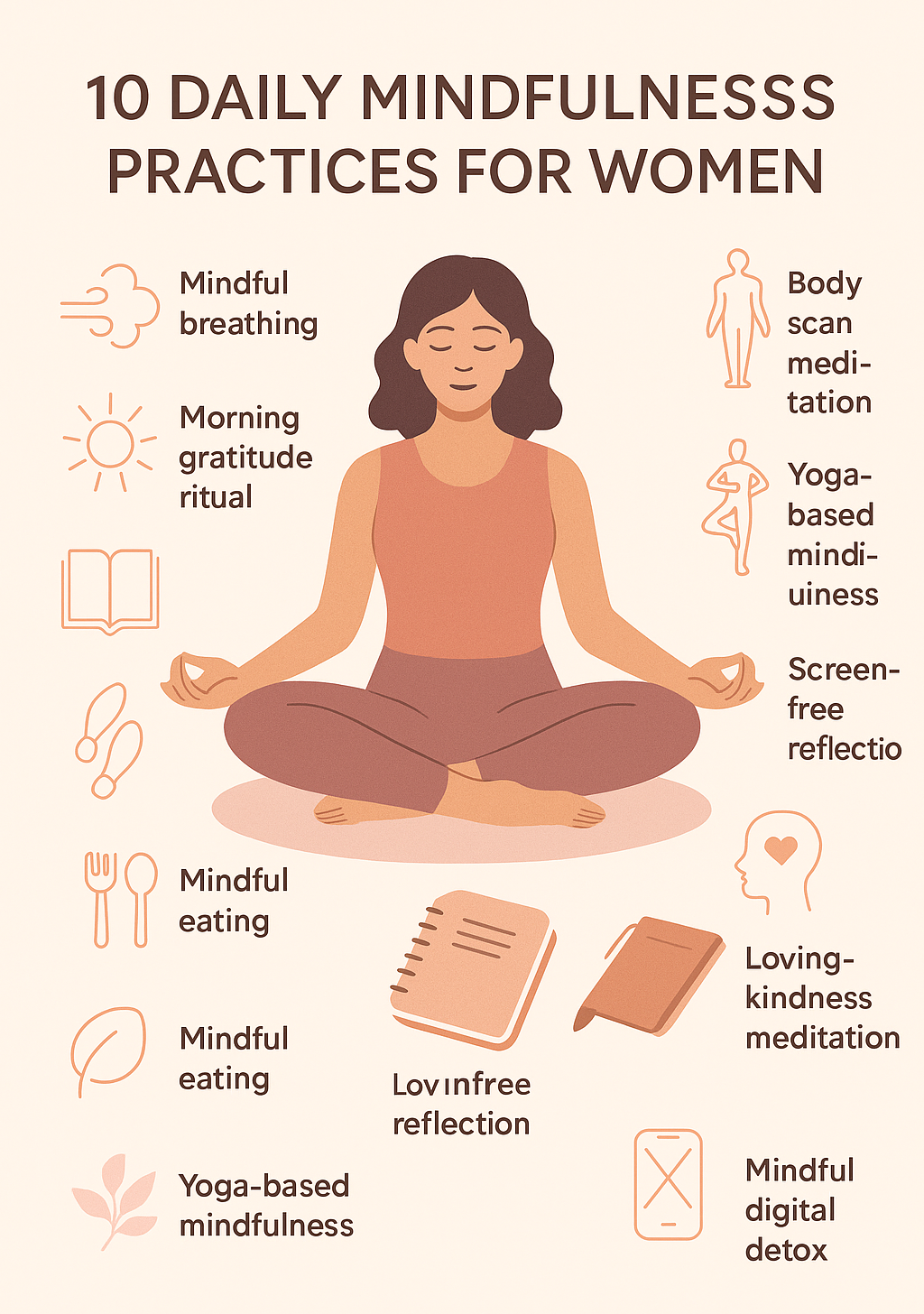
Mindful Breathing – Anchor Yourself in the Now
Your breath is a doorway to calm when life feels heavy, focus on slow steady inhales and gentle exhales notice the rhythm it’s your body natural reset button practicing mindful breathing for even two minutes reduces mental clutter, lowers stress hormones and recentres your focus.
Benefits Of Mindful Breathing
- Calms anxiety and heart rate.
- Improves concentration and focus.
- Balances mood swings.
- Helps release emotional tension.
- Encourages instant relaxation.
Morning Gratitude Ritual – Begin the Day With Grace
How you begin your morning shapes everything that follows before checking your phone, breathe and name three things you’re grateful for your health, your home, your resilience gratitude softens mental chaos and draws your attention toward abundance instead of lack.
Benefits Of Gratitude Ritual
- Boosts daily happiness levels.
- Cultivates emotional balance.
- Strengthens immunity.
- Reduces negativity bias.
- Enhances long-term optimism.
Journaling for Awareness – Meet Your True Self on Paper
Writing down your thoughts is a form of emotional cleansing when you journal, you untangle inner chaos and give your feelings a safe voice use it to release anger, record joy or uncover hidden fears. Over time you’ll recognize patterns and develop deep self understanding.
Benefits Of Journaling
- Builds emotional clarity.
- Reduces anxiety and overwhelm.
- Improves decision-making.
- Enhances self-awareness.
- Encourages personal growth.
Mindful Walking – Meditation in Motion
Walking can be deeply meditative when done with awareness feel the ground beneath your feet, notice your posture, your breath the world around you instead of rushing, allow yourself to move with presence I a simple practice that reconnects body and mind while gently easing emotional fatigue.
Benefits Of Mindful Walking
- Increases mental clarity.
- Reduces stress and anger.
- Strengthens body awareness.
- Improves mood naturally.
- Restores calm energy.
Mindful Eating – Nourish Your Body With Intention
Food is sacred each bite you take is an act of self love slow down and truly taste your meal the texture, aroma, and flavour put away distractions and honour your body’s signals of hunger and fullness mindful eating turns nourishment into a soulful ritual instead of a rushed routine.
Benefits of Mindful Eating
- Supports better digestion.
- Prevents overeating.
- Deepens appreciation for food.
- Builds healthy body image.
- Reduces guilt around eating.
Body Scan Meditation – Reconnect With Yourself
Your body speaks through sensations tension, warmth, fatigue close your eyes and move your awareness slowly from your head to your toes notice how each part feels without judgment this gentle observation strengthens mind body connection, dissolves tension and helps you truly rest.
Benefits of Body Scan Meditation
- Relaxes nervous system.
- Improves sleep quality.
- Reduces chronic tension.
- Increases self-compassion.
- Promotes full-body awareness.
Yoga Based Mindfulness – Flow With Presence
Yoga blends movement breath, and awareness a perfect practice for the modern woman focus on each posture, syncing it with your breath you’re not performing you’re feeling even 10 minutes of gentle stretching at home can clear emotional fog and boost vitality.
Benefits of Yoga Mindfulness
- Enhances flexibility and circulation.
- Regulates hormones naturally.
- Reduces emotional stress.
- Strengthens focus and balance.
- Improves posture and energy flow.
Screen Free Reflection – Detox Your Mind Daily
Create one sacred hour each day without screens turn off your phone step away from social media and just be read, meditate or enjoy silence this simple digital pause helps detox mental overstimulation, restoring presence and emotional balance.
Benefits of Screen Free Mindfulness
- Reduces digital fatigue.
- Improves mental clarity.
- Strengthens self connection.
- Enhances creativity.
- Boosts emotional calmness.
Loving Kindness Meditation – Expand Your Heart Space
Sit quietly breathe deeply and repeat May I be safe, May I be peaceful or May I live with ease then extend those wishes to others this meditation nurtures compassion, forgiveness and emotional healing turning self-criticism into soft understanding.
Benefits of Loving Kindness Meditation
- Heals emotional wounds.
- Cultivates empathy and love.
- Reduces resentment.
- Strengthens emotional resilience.
- Deepens self-acceptance.
Mindful Digital Detox – Reclaim Your Peace
A digital detox isn’t about rejecting technology it is about reclaiming control designate screen free weekends or no-phone evenings use that time to reconnect with nature, loved ones or yourself even short breaks from screens renew your mind and nurture inner stillness.
Benefits of Mindful Digital Detox
- Eases anxiety and burnout.
- Improves sleep quality.
- Increases focus and productivity.
- Restores inner calm.
- Rebuilds genuine human connection.
High Impact Mindfulness Practices for Stress Relief
These high impact mindfulness practices for stress relief are your emotional lifelines they work quickly, helping you return to balance even in the middle of chaos you don’t need hours just presence, breath, and intention.
Let these small yet powerful practices calm your nervous system and restore your sense of safety:
Guided Meditations – Let Your Mind Be Led to Calm
When your mind is restless guided meditations act like gentle hands leading you back to peace listening to a soothing voice helps silence inner noise and bring awareness to your breath and body it is especially powerful at night or after emotional overwhelm.
- Quickly reduces anxiety and tension.
- Deepens relaxation response.
- Improves focus and mood.
- Lowers heart rate and blood pressure.
- Supports better emotional regulation.
Mindful Music Listening – Let Sound Heal Your Spirit
Music has a language the soul understands sit quietly, close your eyes and listen fully not while multitasking but with awareness notice each instrument, each lyric let sound carry away your tension it is an effortless yet profound way to centre yourself with peace and calm.
- Calms the amygdala (stress centre of the brain).
- Stabilizes mood swings.
- Lowers cortisol and heart rate.
- Enhances emotional expression.
- Promotes relaxation and joy.
Create a calm playlist for stressful days or evening reflection.
Grounding Exercises – Return to the Present Moment
When stress disconnects you from your body grounding techniques bring you back home the 5-4-3-2-1 method works beautifully Name 5 things you see, 4 you can touch, 3 you hear, 2 you smell, and 1 you taste this sensory awareness interrupts anxious thoughts and restores stability.
- Instantly relieves emotional overwhelm.
- Increases body awareness.
- Promotes mindfulness and control.
- Reduces dissociation during panic.
- Centers the mind and emotions.
Use grounding before important meetings, emotional talks or any high pressure situation.
Visualization – Create Calm Through Imagination
The mind does not distinguish between what’s real and what’s vividly imagined use that to your advantage close your eyes and picture a peaceful place waves rolling, sunlight warming your face or your childhood garden visualization soothes the nervous system and helps release pent-up stress from the body.
- Activates parasympathetic relaxation response.
- Reduces anxiety and irritability.
- Enhances optimism and motivation.
- Strengthens emotional balance.
- Promotes inner peace and grounding.
Try combining visualization with slow breathing for double the calm effect.
Affirmation Rituals – Rewire Stress Into Strength
Affirmations are not wishful thinking they’re emotional reprogramming when repeated with intention, they shift your mindset from fear to faith choose words that feel grounding “I am safe,” “I am capable,” “I am enough.” Over time they become your mental shield against stress.
- Replaces negative thought loops.
- Increases confidence and calm.
- Builds emotional resilience.
- Encourages self compassion.
- Reduces cortisol levels naturally.
Write your affirmations on sticky notes mirror reminders work wonders during hectic mornings.
How to Incorporate Mindfulness Into a Busy Life
Let’s be real women’s schedules are packed but mindfulness does not require hours it requires intention.
Here’s how to make it fit:
Remember mindfulness isn’t another task it is a way to make everything you already do calmer and more conscious.
Science Backed Benefits of Mindfulness for Women’s Health
Mindfulness is not just spiritual it is science-backed self-care countless studies confirm that mindful awareness reshapes brain pathways, reduces stress hormones, and restores inner balance.
juggling constant emotional, physical, and hormonal demands these benefits go far beyond calm they are essential tools for long-term mental clarity and emotional strength.
Hormonal Balance
Mindfulness regulates the body’s stress response by lowering cortisol and balancing estrogen-progesterone cycles. This helps ease PMS, anxiety, and menopausal mood fluctuations.
When practiced daily it creates harmony between your mind and hormones, improving emotional stability, reducing fatigue and supporting overall reproductive and adrenal health naturally.
Improved Sleep
Mindfulness teaches your mind to release overthinking, quieting racing thoughts that keep you awake. With consistent practice, it enhances melatonin production and restores the body’s natural sleep rhythm combine this with sleep apps for insomnia or guided meditations to experience deeper and more rejuvenating rest.
Heart and Immune Health
Chronic stress is hard on the heart mindfulness lowers blood pressure, reduces inflammation and improves cardiovascular function research shows regular meditation strengthens immunity by calming the nervous system and supporting healthy cell function a vital benefit for women who often carry both physical and emotional loads daily.
Productivity & Focus
A calm mind is a clear mind mindfulness strengthens attention span and decision-making by reducing distractions and mental noise it allows women especially those multitasking across work and home to stay composed under pressure, think clearly and complete tasks efficiently without emotional exhaustion or burnout.
Mental Resilience & Stress Recovery
Mindfulness reshapes the brain’s stress circuits improving your ability to bounce back after emotional setbacks it trains your nervous system to recover faster from tension, anxiety or disappointment with time your emotional threshold rises you become less reactive, more cantered and far more resilient to life’s fluctuations.
Common Mistakes Women Make in Mindfulness Practice
Even the most well intentioned women sometimes get discouraged mindfulness looks simple but living it deeply takes patience, honesty, and compassion.
Here’s what to avoid:
Creating a Mindfulness Routine at Home (Step by Step)
A mindful life isn’t built overnight it’s nurtured moment by moment in the spaces between chores conversations, and quiet pauses you don’t need fancy tools or long hours what you need is presence, consistency, and kindness toward yourself.
Here’s a step-by-step way to create a meaningful mindfulness routine right where you are at home in your own rhythm.
Step 1: Set an Intention, Not a Goal
Before you start remind yourself mindfulness is not about achieving anything It’s about arriving in this moment just as you are choose an intention that feels personal and gentle “I want to be more patient with myself,” or “I want to start each day with peace.
Write it down somewhere visible your mirror, journal, or desk let that intention guide your practice instead of chasing perfection.
Step 2: Create a Small, Sacred Space
Find a quiet corner in your home where you can sit comfortably even a small cushion by the window works beautifully add little touches that calm your senses: a candle, soft light, a small plant or your favourite essential oil.
This becomes your anchor spot a place that signals your mind it’s time to slow down, breathe and return to yourself.
Step 3: Begin Each Morning With Stillness
The first few minutes after waking are powerful your mind is still uncluttered, your heart open
before reaching for your phone, sit quietly place one hand on your chest take three slow breaths and simply feel the rise and fall.
You can add a short gratitude reflection name three things you’re thankful for this gentle pause sets the emotional tone for your entire day.
Step 4: Practice Mindful Movement
Bring mindfulness into your body. You don’t need an hour-long yoga session even five minutes of stretching, breathing and gentle movement can shift your energy completely focus on how your body feels not how it looks use your breath as your guide inhale strength, exhale tension.
If you enjoy yoga, keep your yoga equipment for home nearby to make your practice comfortable and inviting.
Step 5: Make Meals a Mindful Ritual
Eating is one of the simplest yet most sacred opportunities to be present before eating, take a breath and silently thank the food for nourishing you put away all screens, chew slowly, and truly taste your meal notice the Colors, textures, and flavours.
This is not just eating it’s an act of appreciation and self-care reminding your body that it deserves kindness.
Step 6: Create Mindful Breaks During the Day
Your day will get busy that’s inevitable but mindfulness isn’t about escaping work it’s about weaving awareness through it schedule small mindful pauses even two minutes at a time.
- Look away from screens and notice your breath.
- Stretch your arms and soften your jaw.
- Step outside for one slow inhale of fresh air.
Use screen time management apps or gentle reminders on your phone to help you remember these sacred pauses.
Step 7: Pause and Reset During Transitions
Between tasks from work to home, or cooking to bedtime take a mindful breath this small transition pause allows your nervous system to reset you’ll find yourself calmer, less reactive and more emotionally balanced throughout the day it is not about doing more it’s about doing each thing with awareness.
Step 8: Evening Reflection and Release
As the day ends give yourself five minutes of quiet reflection sit comfortably, close your eyes and scan through your day without judgment notice what went well, what felt heavy and what you’re ready to release jot down any lingering thoughts or gratitude notes in your journal pair this moment with sleep apps or soft instrumental music to ease your mind before rest.
Step 9: Be Flexible Flow With Life
Some days you’ll meditate deeply other days you’ll barely breathe between tasks that’s okay
mindfulness is not about keeping perfect routines it’s about returning each time you drift away
if you miss a day start again tomorrow with softness not guilt.
Every mindful return strengthens your awareness and emotional balance this is real progress not failure.
Conclusion: Mindfulness Is a Journey, Not a Task
Dear woman, remember this mindfulness is not about changing who you are it’s about remembering who you’ve always been beneath the noise.
You don’t need to meditate for hours or live like a monk you just need a few sacred moments each day to breathe, to listen, to be.
Over time these small moments create deep transformation less stress, more peace and an unshakable connection with yourself.
So the next time life feels heavy, pause take a slow breath and whisper to yourself I am here, I am enough, I am home.